Looking for a neighborhood where you can step into the river valley, reach the University of Alberta with ease, and still come home to a primarily residential setting? Belgravia stands out for exactly that balance. If you are considering a move in central Edmonton, this guide will help you understand what daily life, housing, and connectivity look like here. Let’s dive in.
Why Belgravia Gets Attention
Belgravia is an established Edmonton neighborhood just south of the University of Alberta’s North Campus and University Avenue. According to the City of Edmonton neighborhood profile, development began in 1912, and the area is bounded on two sides by the river valley and ravine system.
That setting gives Belgravia a close-in location with a distinct sense of separation from busier areas nearby. The community walking map also describes it as a primarily residential area with elm-lined streets, many original residents, and lots of new families, which helps explain why the neighborhood feels established but still active and evolving.
River Valley Access Shapes Daily Life
One of Belgravia’s biggest lifestyle advantages is its connection to the North Saskatchewan River valley. The neighborhood’s west side borders the river valley, and the area offers many walking opportunities, according to the community walking map.
If you enjoy getting outside without planning your whole day around it, that matters. A quick walk can lead to scenic routes, open space, and places to pause, including Keillor Point, a City viewing area on Saskatchewan Drive with river valley views.
The walking map also highlights practical everyday features, not just scenery. You will find Belgravia Park, the Belgravia Community League hall, Belgravia School, and a dog off-leash area that wraps around the south and west sides of the community.
Campus Is Right Nearby
Belgravia’s location next to the University of Alberta is one of its defining features. The University of Alberta campus overview places North Campus along the edge of the river valley, surrounded by neighborhoods including Belgravia.
For buyers who want quick access to campus facilities, that proximity is a major plus. The community walking map shows that destinations such as University Hospital, the Jubilee Auditorium, Rutherford House, and Hub Mall are accessible on foot from the surrounding area.
This is part of what makes Belgravia feel so practical. You are close to a major institution and its amenities, but the neighborhood itself is still described by the City as primarily residential rather than commercial.
Transit Makes Getting Around Easier
Belgravia is also strong on transit, especially for a mature neighborhood. The City notes that the LRT line was extended along the eastern edge of the community in late 2008, and the current LRT system map shows McKernan/Belgravia on the Capital Line.
If accessibility matters to you, ETS lists all entrances at McKernan/Belgravia Station as accessible. That can make day-to-day commuting easier for a wide range of riders.
Walkability is another part of the story. The community walking map labels 0.75 kilometers as about a 10-minute walk and shows routes connecting Belgravia to campus, parks, and nearby amenities. For many buyers, that kind of connected layout is just as important as the home itself.
What Homes Look Like in Belgravia
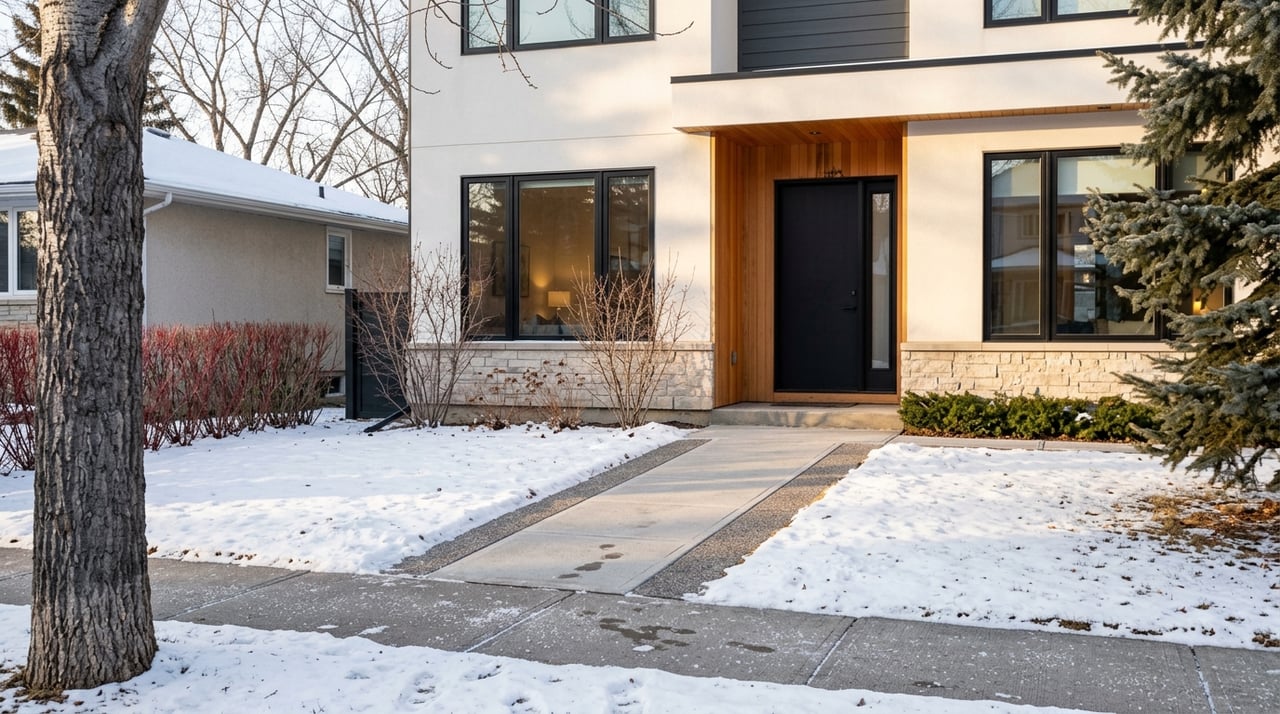
Housing in Belgravia is still shaped by its history. The City’s neighborhood profile says the area is predominately low-density bungalows, semi-bungalows, and two-storey homes, with some higher-density housing along the edges.
That matters if you are searching for a neighborhood with a mature residential pattern rather than an apartment-dominated feel. Most of Belgravia developed before 1960, and the former WCB site at the south end was later redeveloped into single-family housing in the early 2000s.
In simple terms, Belgravia offers a mix of older homes, some newer redevelopment, and a generally low-density streetscape. For buyers, that can mean more variety in home style, lot character, and renovation level than you might find in a newer subdivision.
Infill Is Part of the Conversation
Belgravia is established, but it is not static. In 2025, the City received rezoning applications on 76 Avenue NW west of 116 Street proposing small-medium and medium-scale residential forms, with one site within 400 meters of McKernan/Belgravia LRT Station.
That does not mean the whole neighborhood is changing at once. Based on the City profile, infill guidance, and current rezoning activity, Belgravia’s housing story is better understood as a mix of original homes, selective redevelopment, and context-sensitive infill rather than wholesale transformation.
For buyers and sellers, this is worth watching because it can affect how specific pockets of the neighborhood evolve over time. Homes closer to transit and edge locations may see different development patterns than quieter interior streets.
Does Belgravia Feel Student-Heavy?
This is a common question because the University of Alberta is so close. The short answer is that Belgravia is near campus, but City and community sources describe it as primarily residential, with many original residents and new families.
That distinction matters if you want convenience to campus without feeling like you live in the middle of a high-turnover student district. The neighborhood’s housing pattern, mature trees, and river valley edges all support a more residential feel.
What to Know About Traffic
Convenience can bring trade-offs, and traffic is one of them. In 2025, the City launched a Belgravia traffic review to study shortcutting and possible interventions.
For you as a buyer, that is not necessarily a negative. It simply means some streets may feel the effects of through-traffic because the neighborhood offers strong cross-city access. When you are evaluating a specific home, street-level context becomes especially important.
Why Buyers Are Drawn to Belgravia
Belgravia appeals to buyers who want more than one lifestyle advantage in the same place. The combination of river valley access, walkability, transit, and campus proximity is hard to replicate in many neighborhoods.
It is also a neighborhood where the setting can shape your routine in small but meaningful ways. You might walk to campus, head out for a river valley loop, use the off-leash area regularly, or enjoy a quieter residential street lined with mature trees.
For some buyers, Belgravia may feel like a fit because of location efficiency. For others, it is the balance of urban access and residential character that makes it stand out.
Is Belgravia the Right Fit for You?
Belgravia may be worth a closer look if you want:
- A central Edmonton location near the University of Alberta
- Easy access to the river valley and walking routes
- LRT connectivity through McKernan/Belgravia Station
- A primarily residential neighborhood with mature housing stock
- A mix of original homes and selective newer redevelopment
Like any neighborhood, the right fit depends on your priorities. Home style, street location, transit access, and your comfort with an evolving mature community all play a role.
If you are thinking about buying or selling in Belgravia, working with a local agent who can help you compare block-by-block differences, redevelopment patterns, and market positioning can make the process much clearer. If you want thoughtful guidance on Belgravia or other central Edmonton neighborhoods, connect with Franco Maione.
FAQs
What is Belgravia like for everyday living in Edmonton?
- Belgravia offers a primarily residential setting with mature trees, river valley access, walking routes, and close proximity to the University of Alberta and LRT service.
What kinds of homes are common in Belgravia?
- According to the City of Edmonton, Belgravia is mostly made up of low-density bungalows, semi-bungalows, and two-storey homes, with some higher-density housing along the edges.
How close is Belgravia to the University of Alberta?
- Belgravia sits immediately south of the University of Alberta’s North Campus and University Avenue, making campus access one of the neighborhood’s defining features.
Is Belgravia good for transit in Edmonton?
- Yes. McKernan/Belgravia Station is on the Capital Line, and ETS lists the station entrances as accessible.
Does Belgravia have access to the river valley?
- Yes. The neighborhood borders the river valley on its west side, and City resources highlight walking opportunities, scenic routes, and Keillor Point in Belgravia.
Is new development happening in Belgravia?
- Yes. Belgravia remains mostly an older single-family neighborhood, but the City has also received recent rezoning applications tied to small-medium and medium-scale residential development near 76 Avenue NW.